

OrbitAI — Calm, Intelligent AI for Focus and Deep Work
Role
:
Product Designer & Webflow Developer
Timeline
:
Iterative design sprint
Tools
:
Figma, Webfow, GSAP
Client
:
Industry
:
Market
:
Project Overview
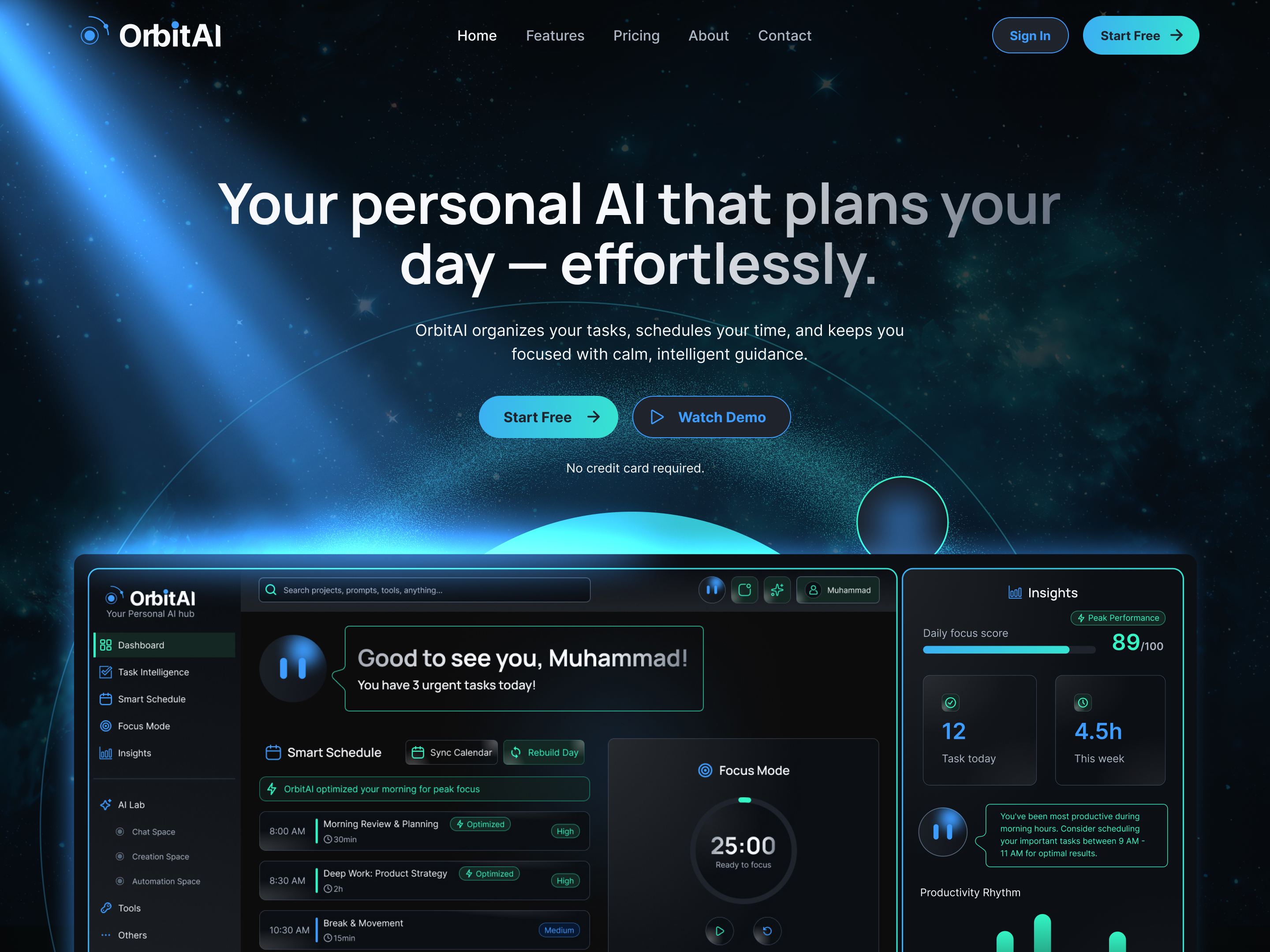
OrbitAI is a personal AI productivity hub designed to help users focus, plan intelligently, and work in alignment with their energy — not against it.
Unlike traditional productivity tools that optimize tasks in isolation, OrbitAI is built around human energy, attention, and decision fatigue. It combines intelligent scheduling, explainable AI, and distraction-free focus into a single, cohesive system.
This case study explores how product thinking, calm visual design, and purposeful motion were used to design both the landing experience and the core dashboard of OrbitAI.

The Challenge/Problem
Problem Statement
Goal Statement
Research & Insights
Design Process
Low Fidelity Wireframes
Design System
Final Designs & Prototype
High Fidelity Wireframes
Final Design & Prototype
The Solution
The Result
Visual Showcase
Case Study
1. The Problem
Modern productivity tools help people manage tasks — but not manage energy, focus, or mental clarity.
People don’t struggle because they lack to-do lists.They struggle because:
- Tasks are scheduled at the wrong time
- Focus is constantly interrupted
- Tools overwhelm instead of guide
- Productivity systems ignore human energy rhythms
Most apps ask users to adapt to the tool.OrbitAI was designed to do the opposite.
2. The Insight
Through observation and personal experience, I identified a key insight:
Productivity is not about doing more —it’s about doing the right work, at the right time, with the right energy.
This led to three core design principles:
- Energy-aware scheduling
- AI that explains why, not just what
- Calm interfaces that reduce cognitive load
OrbitAI is not a task manager. It’s a personal AI companion for focus and decision-making.
3. The Product Vision
OrbitAI is a personal AI hub that:
- Understands tasks written in natural language
- Optimizes schedules based on energy patterns
- Protects focus during deep work
- Learns from behavior and improves over time
Instead of dashboards full of noise, OrbitAI offers:
- Clear guidance
- Gentle nudges
- Confident decisions
4. Core Experience Overview
OrbitAI is built around four connected systems, not isolated features.
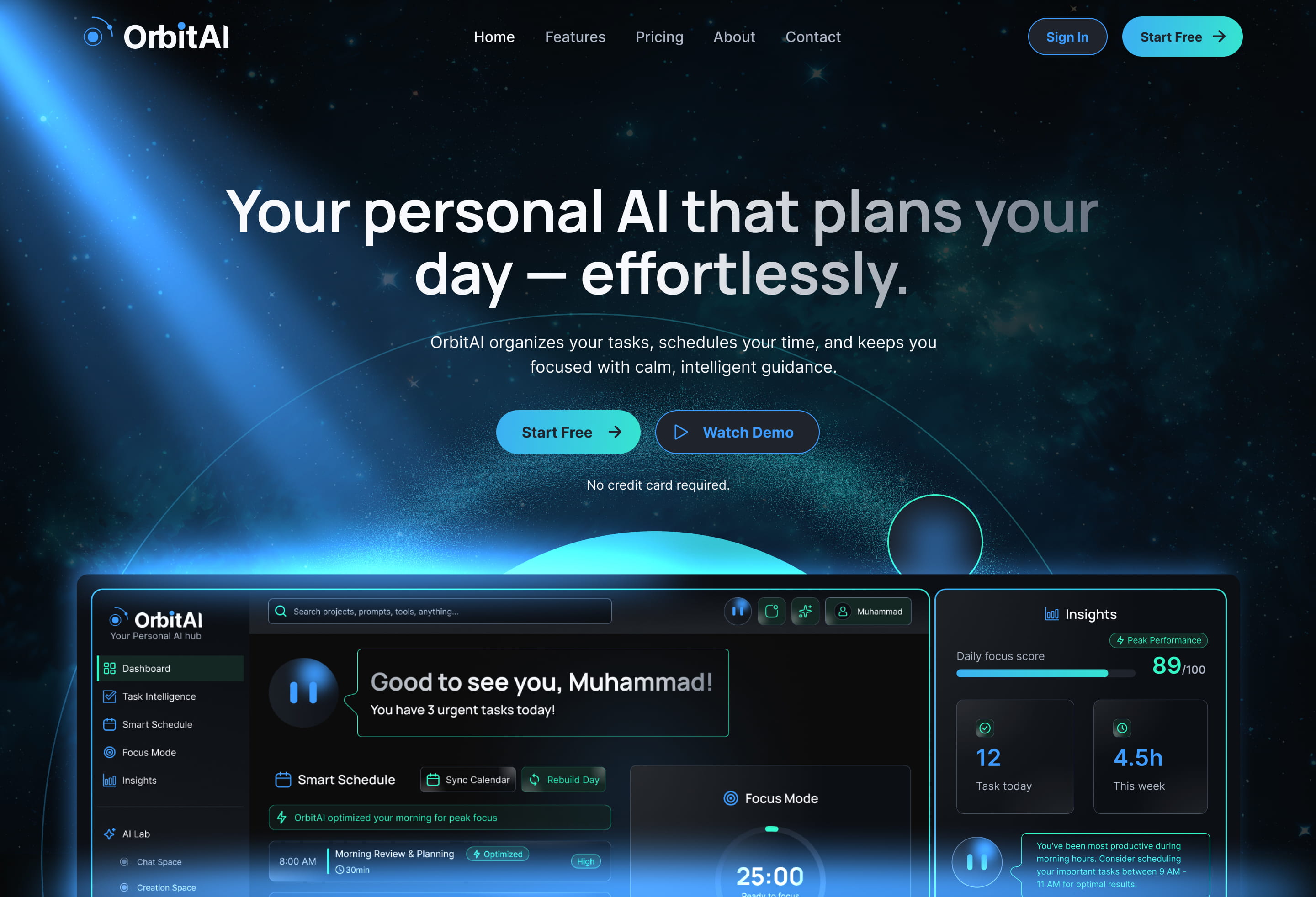
1️⃣ i. Dashboard — The Command Center
The dashboard gives an immediate sense of control and calm.
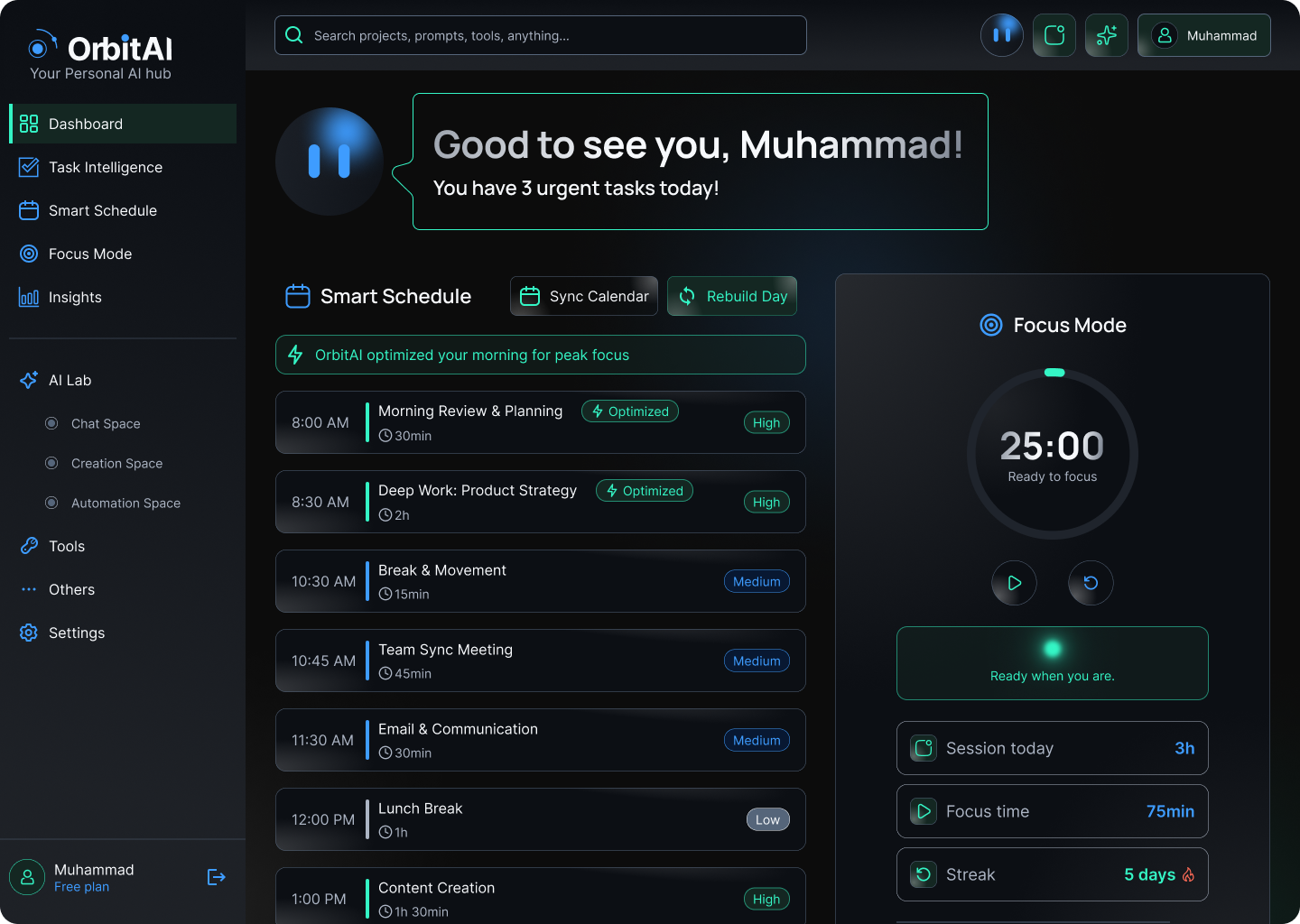
Key goals:
- Show what matters today
- Reduce decision fatigue
- Surface urgency without stress
Design decisions:
- Minimal color usage for hierarchy
- Clear prioritization
- Friendly AI presence to humanize the experience
This is where users feel oriented, not overwhelmed.
2️⃣ ii. Smart Schedule — Energy-Based Planning
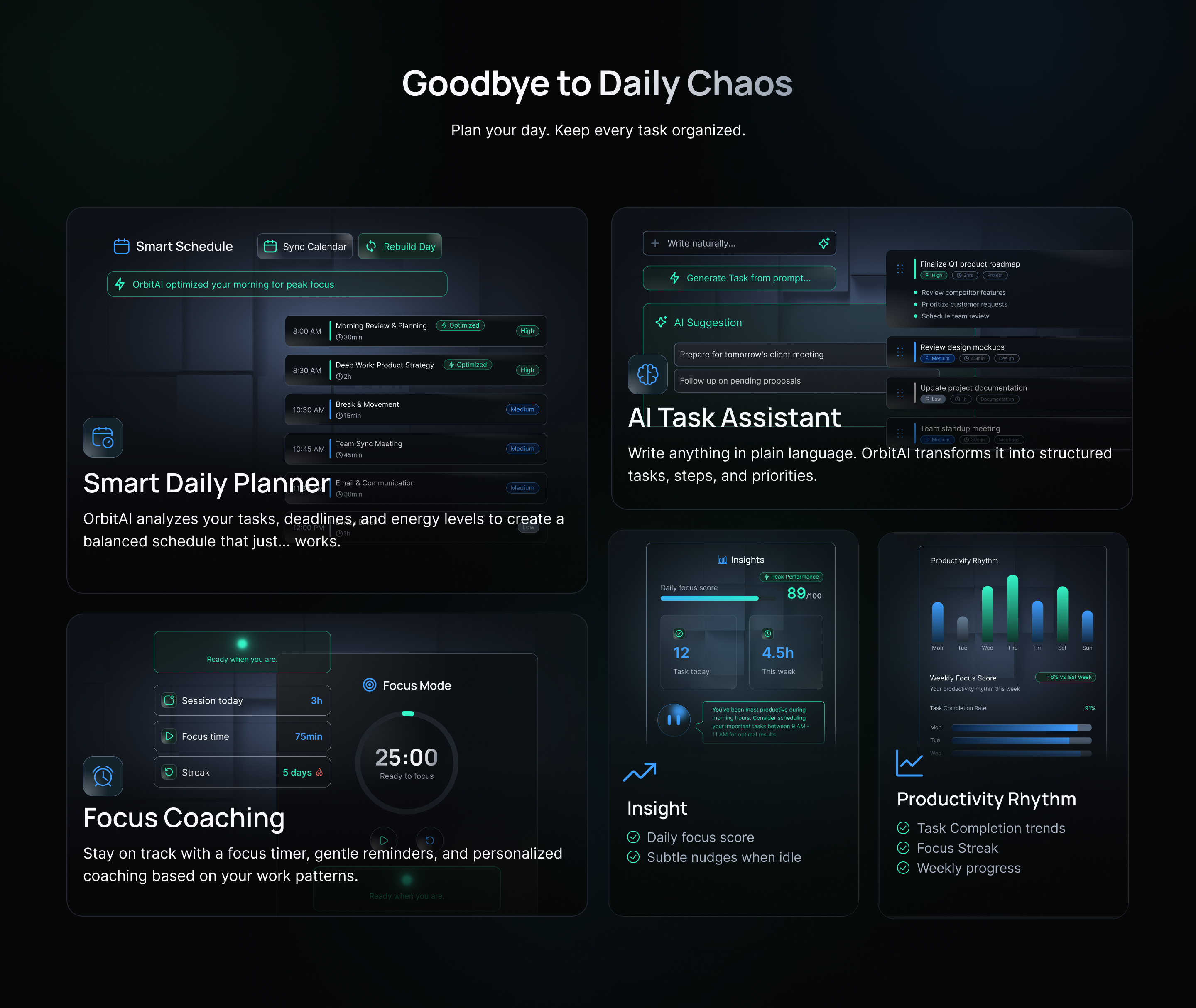
Instead of fixed calendars, OrbitAI schedules tasks around human energy flow.
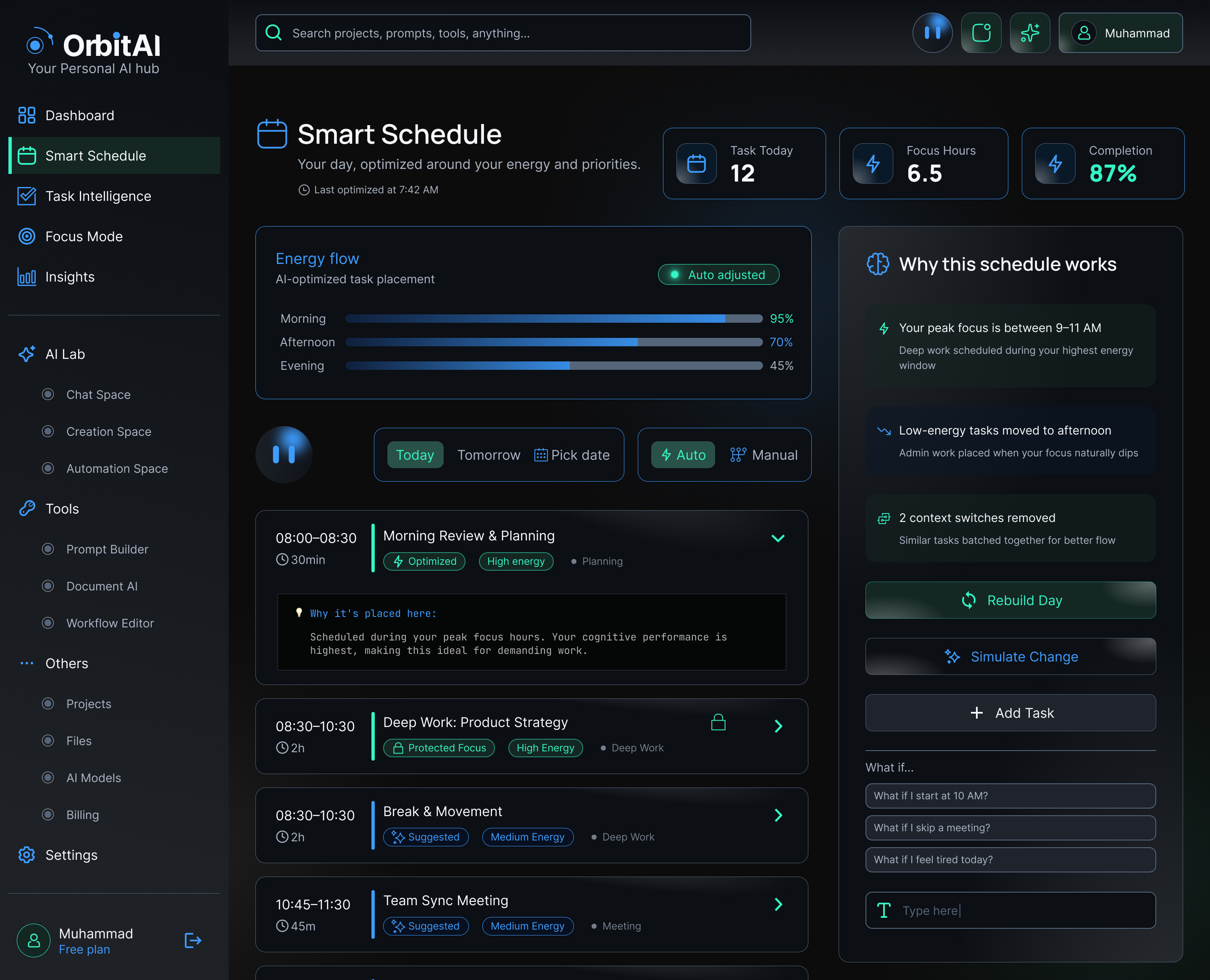
Key features:
- Morning / afternoon / evening energy awareness
- AI-optimized task placement
- Clear explanation: “Why this task is here”
Why it matters:
Users don’t need blind automation — they need trust.
By explaining decisions, OrbitAI builds confidence in the system.
3️⃣ iii. Task Intelligence — From Thought to Action
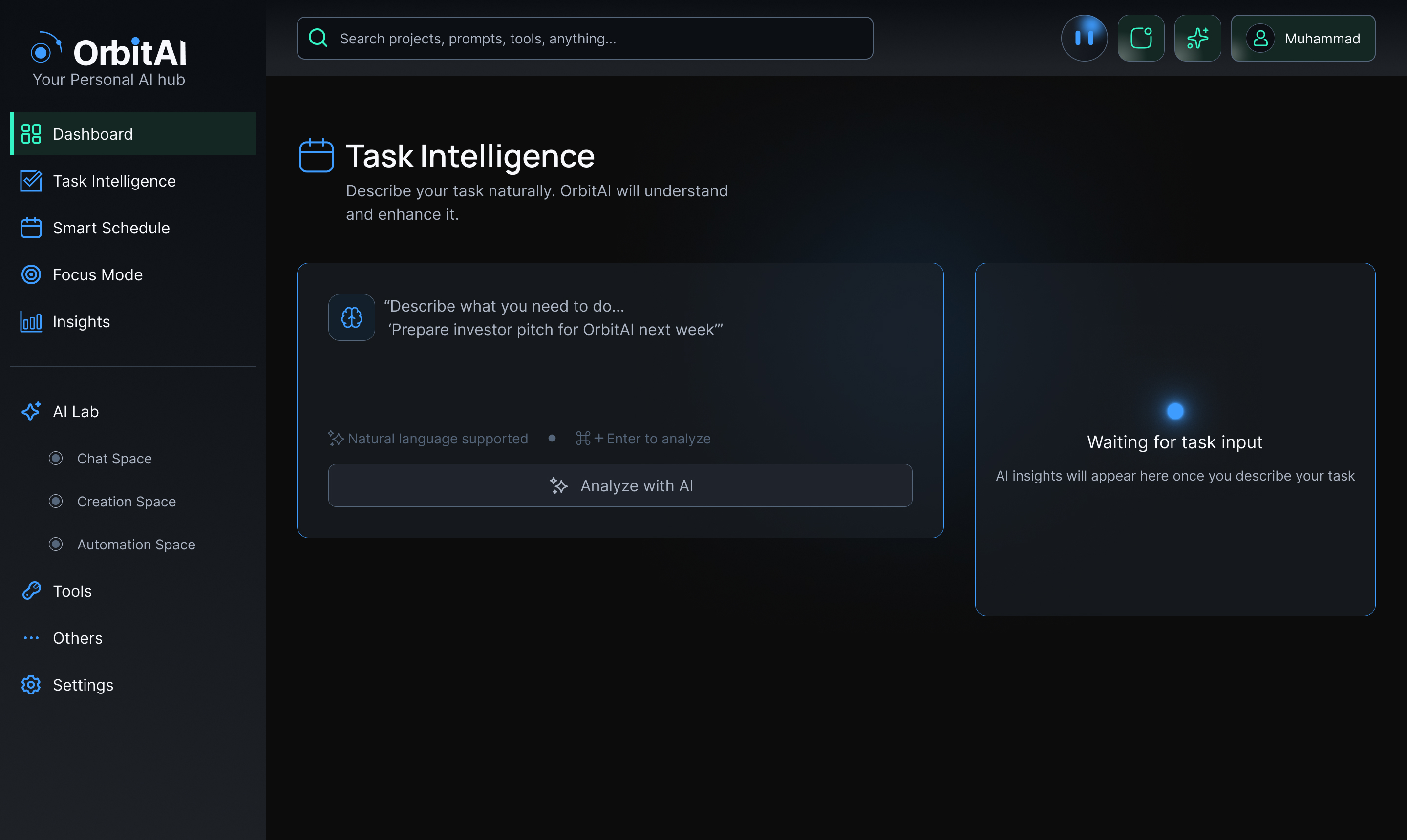
Users describe tasks naturally:
“Prepare investor pitch for next week”
OrbitAI analyzes:
- Intent
- Energy requirement
- Strategic importance
- Time estimation
- Dependencies
Then it transforms thoughts into structured, actionable work.
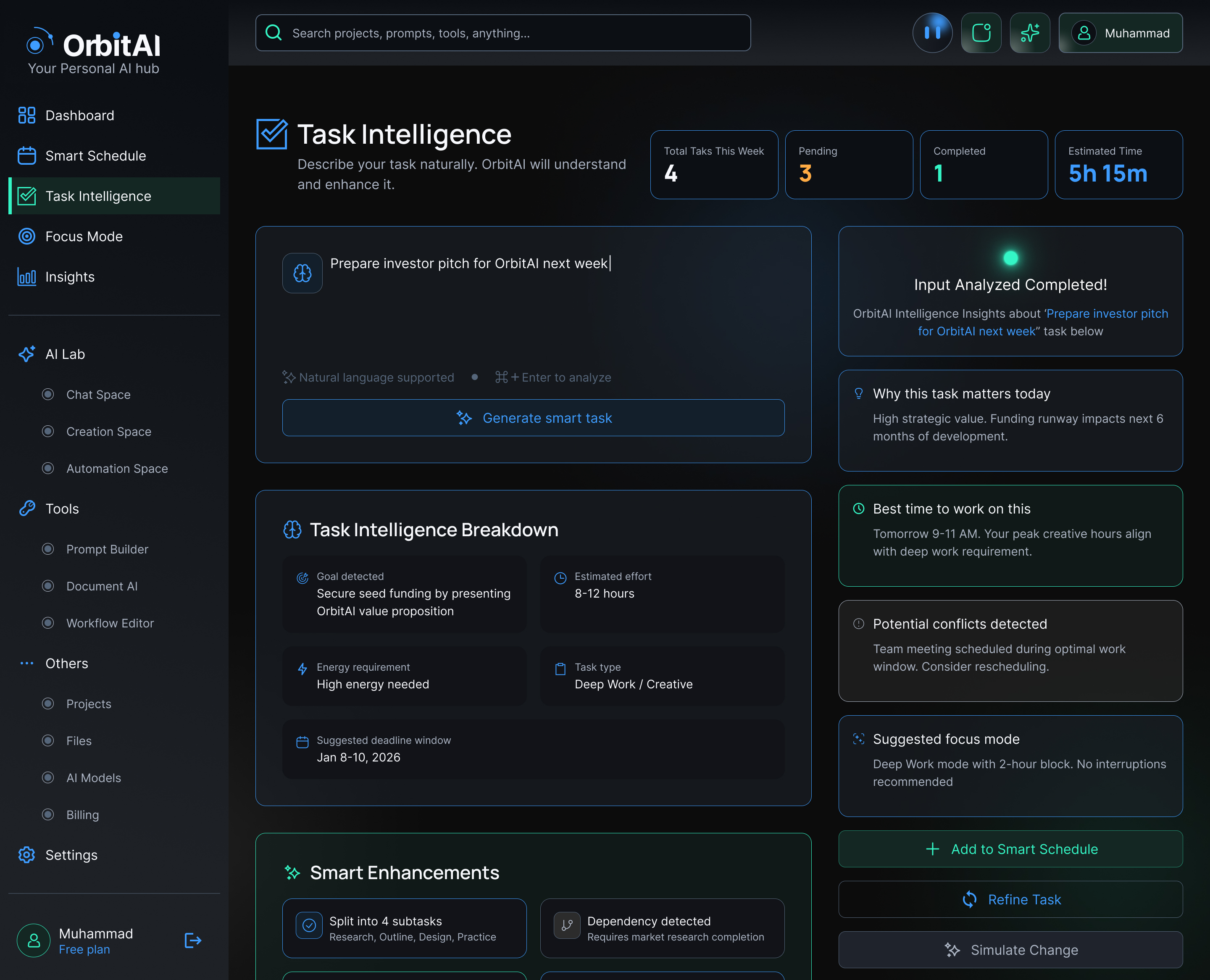
Design focus:
- Clear before/after states
- AI insight cards instead of raw data
- One-click actions (add to schedule, simulate change)
This turns mental clutter into clarity.
4️⃣ iv. Focus Mode — Protecting Deep Work
Focus Mode is intentionally minimal and distraction-free.
Key ideas:
- One task
- One timer
- One purpose
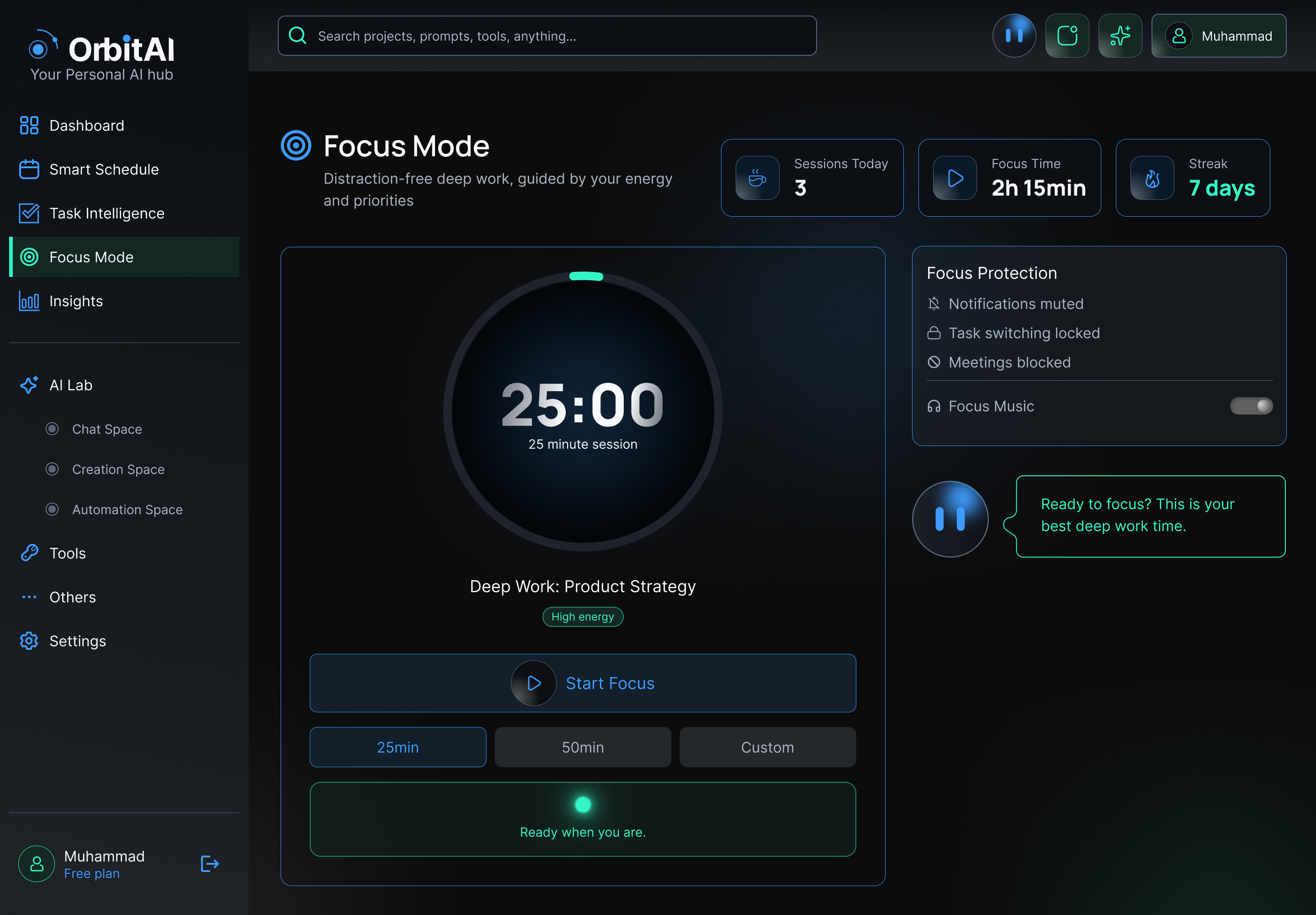
During focus:
- Notifications muted
- Task switching blocked
- Sessions guided by AI recommendations
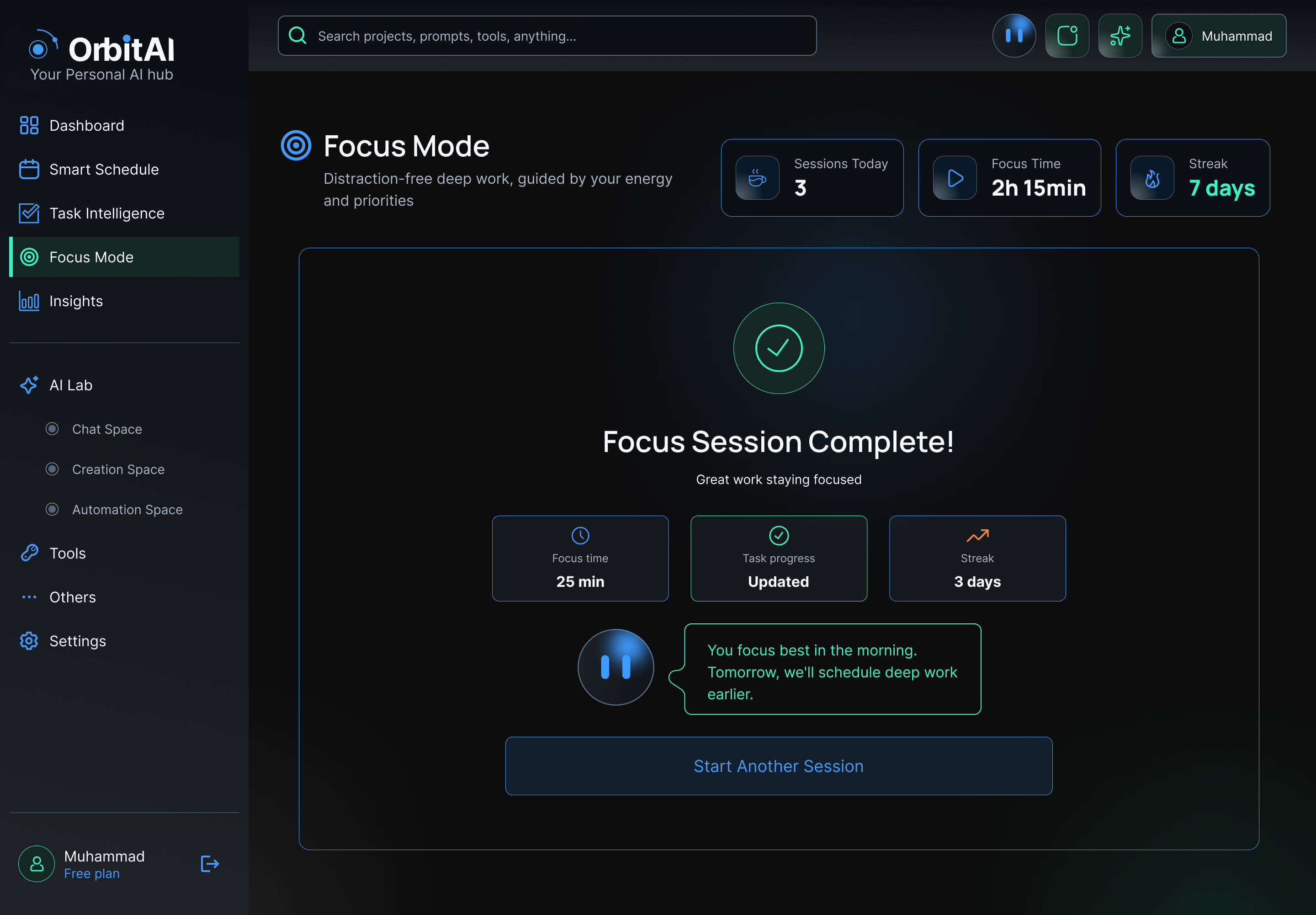
After focus:
- Gentle reinforcement
- Progress acknowledgment
- Adaptive learning for future schedules
This reinforces positive behavior, not pressure.
5️⃣ v. Insights — Learning From You
OrbitAI doesn’t just track productivity — it understands patterns.
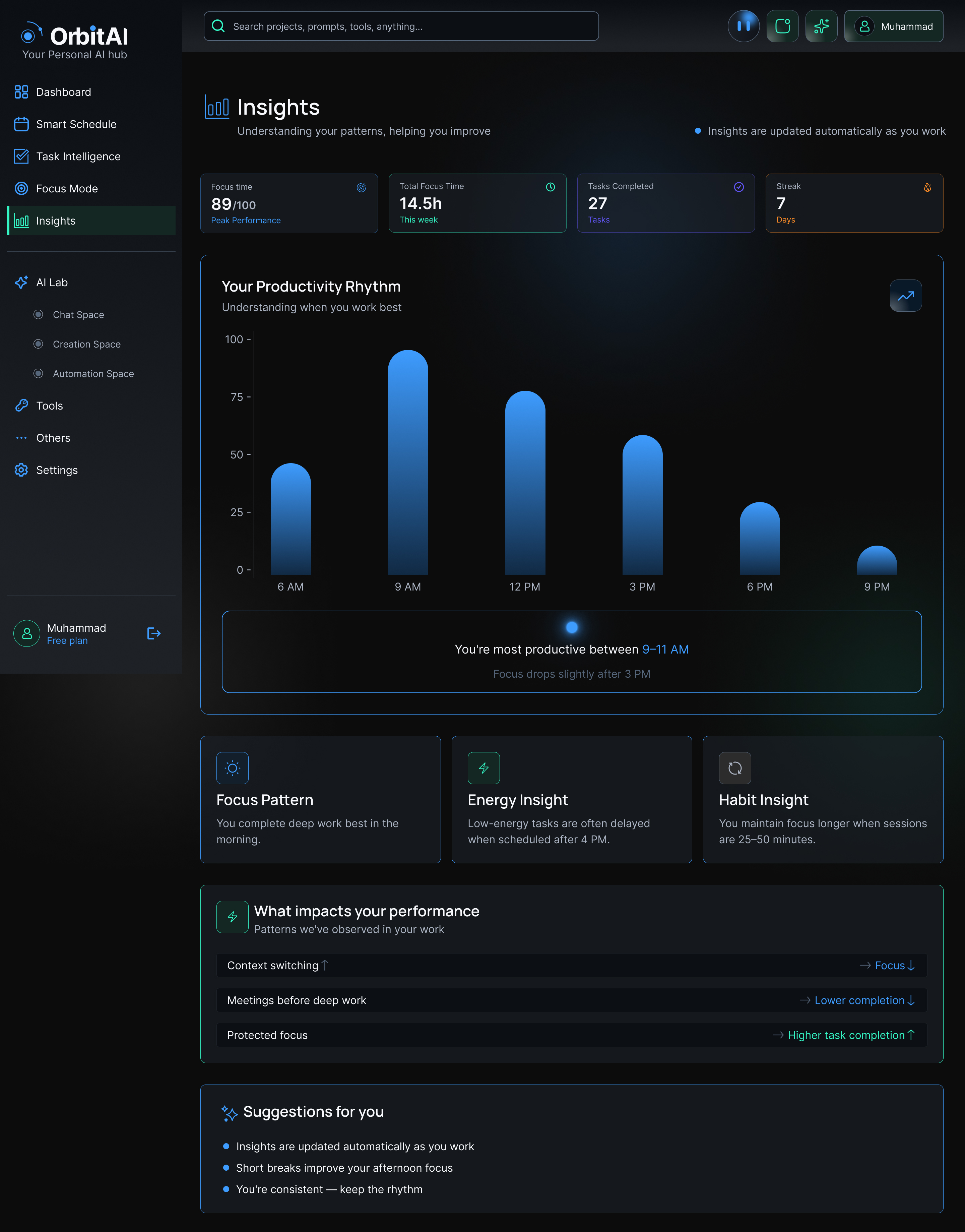
Insights include:
- Productivity rhythm by time of day
- Focus streaks
- Energy dips
- What improves or harms performance
Insights are:
- Short
- Actionable
- Automatically updated
The goal is not analytics — it’s self-awareness.
5. Design System & Visual Language
OrbitAI uses a calm futuristic aesthetic:
- Dark UI to reduce eye strain
- Soft glow accents for guidance
- Motion used only when meaningful
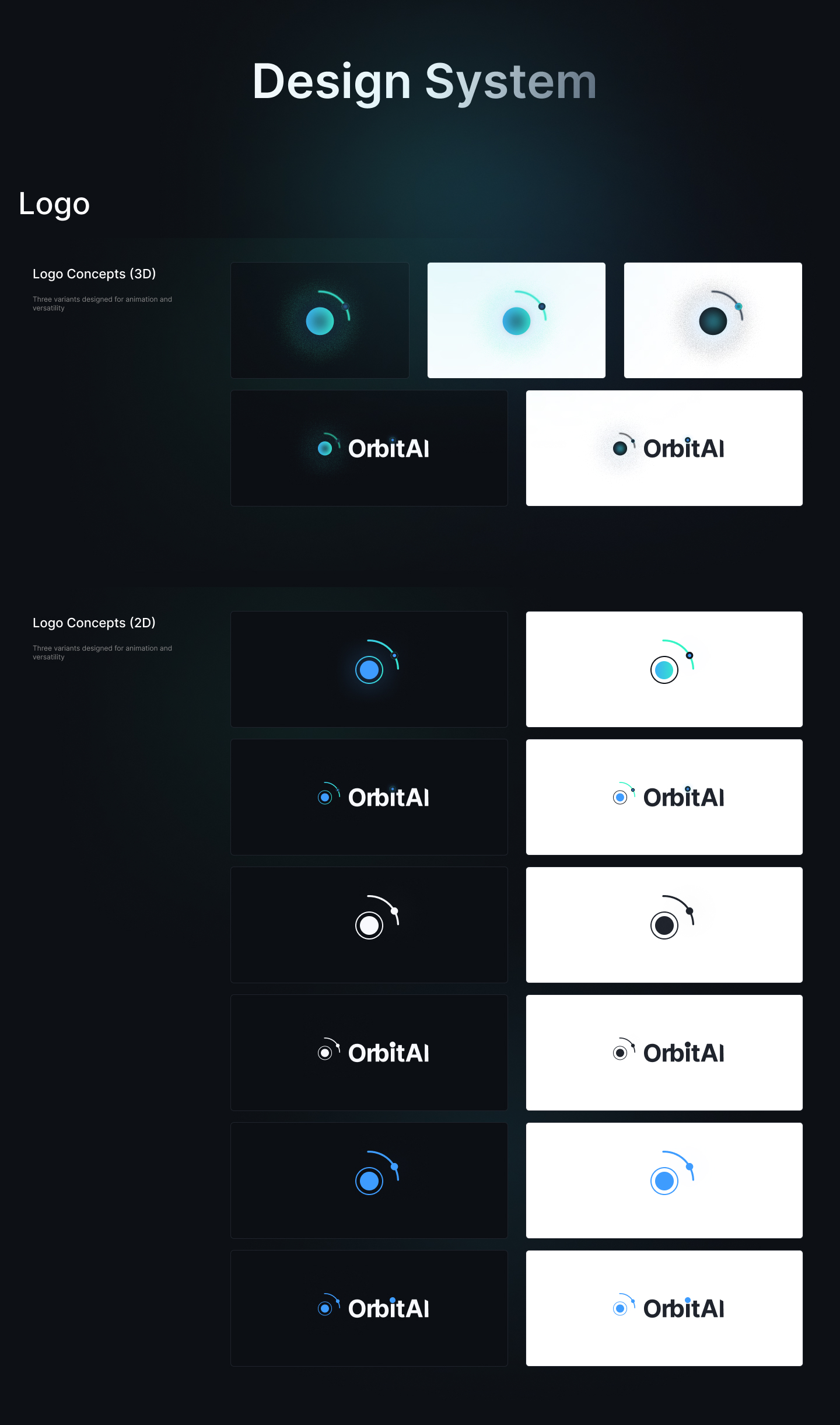
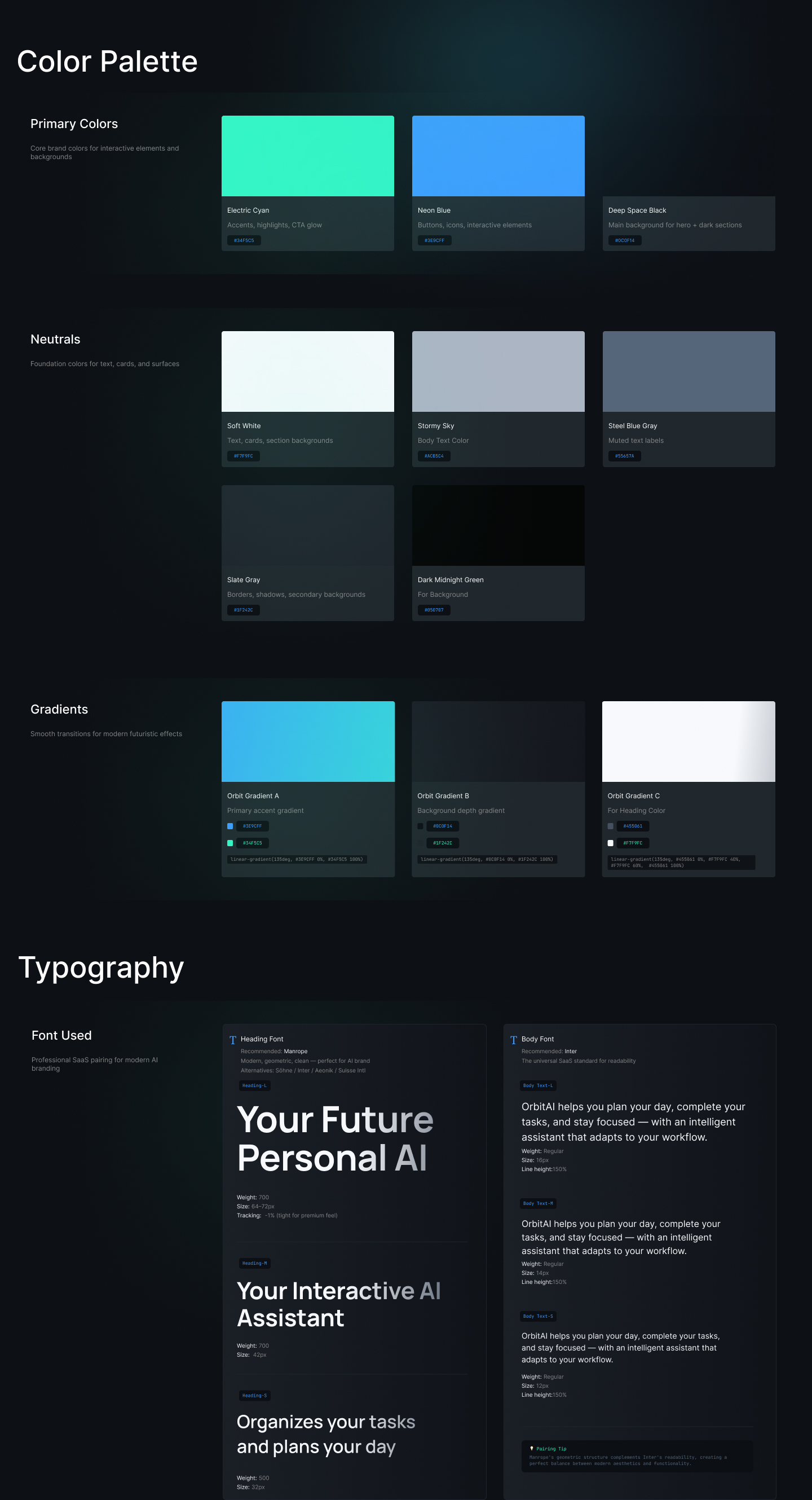
Principles:
- Motion explains, not decorates
- Color signals priority, not noise
- AI presence feels supportive, not intrusive
The interface is designed to disappear when the user is focused.
6. Challenges & Decisions
Challenge: Avoid making AI feel magical but vague
Solution: Explain AI decisions clearly in-context
Challenge: Avoid feature overload
Solution: Design around systems, not features
Challenge: Balance futuristic visuals with usability
Solution: Subtle motion + strong hierarchy
7. Outcome & What This Demonstrates
OrbitAI demonstrates my ability to:
- Think in product systems
- Design AI-assisted experiences responsibly
- Balance aesthetics with clarity
- Design for human behavior, not trends
This project represents:
- Product thinking
- UX maturity
- Visual restraint
- Technical readiness for implementation
Final Thought
OrbitAI is not about productivity hacks.
It’s about designing a calmer relationship between humans and work.
Client Feedback

Next Project


Let’s Build Yours
Ready to turn your vision into a living, breathing digital experience?